

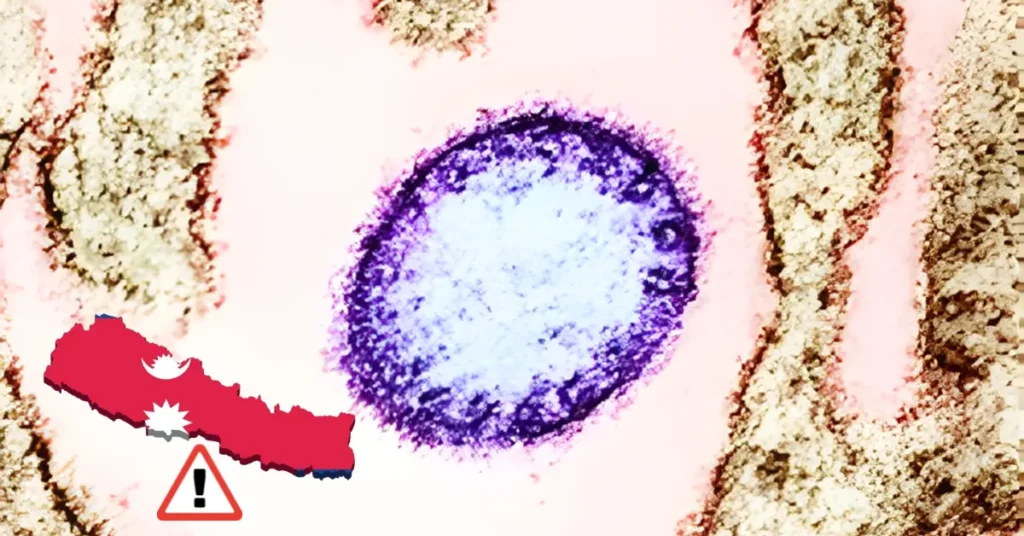
Nepal is on high alert after a confirmed outbreak of the deadly Nipah virus in neighbouring West Bengal, India. Although no cases have been reported inside Nepal so far, health authorities say the risk cannot be ignored due to the open border with India, frequent cross-border movement, and the presence of fruit bats that naturally carry the virus. The Ministry of Health and Population has activated surveillance measures nationwide, urging vigilance without panic.
What Is the Nipah Virus and Why Is It Dangerous?
Nipah virus is a zoonotic virus that spreads from animals to humans and can also be transmitted between people through close contact. It was first identified in Malaysia in 1998 and is now classified by the World Health Organisation as a priority pathogen because of its high fatality rate and epidemic potential. The virus is primarily carried by fruit bats, which can transmit it to humans through contaminated food, such as fruits or raw sap, or through bodily fluids.
In humans, Nipah virus infection can cause fever, headache, respiratory problems, and inflammation of the brain. In severe cases, patients can slip into a coma within days. The fatality rate ranges from 40% to 75%, depending on the outbreak and the healthcare response. Currently, there is no approved vaccine or specific treatment, making early detection and prevention critical.
Why Nepal Is at Risk Despite Having No Confirmed Cases
Nepal shares a long and open border with India, including regions close to West Bengal where the current outbreak has been reported. Thousands of people cross the border daily for work, trade, and family visits, increasing the risk of undetected transmission. Health experts also point out that fruit bats, the natural hosts of the Nipah virus, are commonly found in Nepal’s Terai and subtropical regions.
Environmental factors such as deforestation, urban expansion, and climate change may be increasing contact between bats and humans. While Nepal has never recorded a Nipah outbreak, regional studies suggest that similar viruses could already be present in bat populations, placing the country in a high-risk zone for future spillover events.
What Triggered the Current Alert in Nepal?
The alert follows confirmation of multiple Nipah virus cases in West Bengal, including infections among healthcare workers. Indian authorities have quarantined nearly 100 people and deployed national outbreak response teams to contain the spread. Two nurses and other hospital staff were among those infected, highlighting the risk of human-to-human transmission in healthcare settings.
Given Nepal’s close social and economic links with eastern India, health officials say it is essential to act early. The situation has raised concerns that even a single imported case could strain Nepal’s healthcare system if not detected quickly.
Nepal Government’s Response and Preparedness Measures
The Ministry of Health and Population has intensified screening at Tribhuvan International Airport and all major land border points with India. Health desks are checking travellers for fever and symptoms, especially those arriving from affected regions. Hospitals across the country have been instructed to immediately report suspected cases showing fever with neurological or respiratory symptoms.
The Epidemiology and Disease Control Division has also alerted provincial and local health offices to strengthen surveillance. Designated hospitals are preparing isolation facilities, while health workers are being reminded to follow strict infection-control protocols. Public information campaigns are being circulated to ensure people understand the risks without causing fear.
What Health Experts Are Saying
Infectious disease specialists in Nepal warn that hospital-based transmission could pose a serious threat if a case emerges. Doctors say Nepal’s experience with COVID-19 showed how quickly health facilities can come under pressure. Experts stress that early reporting, proper protective equipment, and rapid isolation will be key if the Nipah virus is detected.
Public health researchers also emphasise the importance of a “One Health” approach, which links human health with animal and environmental monitoring. Surveillance of bat populations and livestock in high-risk areas is being discussed as part of long-term preparedness.
How People in Nepal Can Stay Safe
Health officials advise the public to avoid eating fruits that may have been bitten by bats and to stay away from raw or uncovered food. Maintaining proper hand hygiene is strongly recommended, especially after handling food or animals. Doctors urge people to seek medical care immediately if fever appears along with unusual symptoms such as headache, confusion, or breathing difficulty. Authorities also stress the importance of following updates only from official health agencies to prevent misinformation and unnecessary panic.
The Bigger Picture and What Comes Next
Globally, the Nipah virus is considered one of the most dangerous emerging diseases due to its high death rate and lack of treatment. International efforts are underway to develop vaccines, but these are still in trial stages. Until then, prevention, surveillance, and rapid response remain the only defences.
For Nepal, the current situation is a warning rather than a crisis. Officials say the country remains Nipah-free, but sustained vigilance is essential. With strong coordination, public awareness, and early action, health authorities believe Nepal can reduce the risk and protect its population from this deadly virus.
Also Read: Mountaineer Nims Purja Enters Politics, Contests Election from Sankhuwasabha