
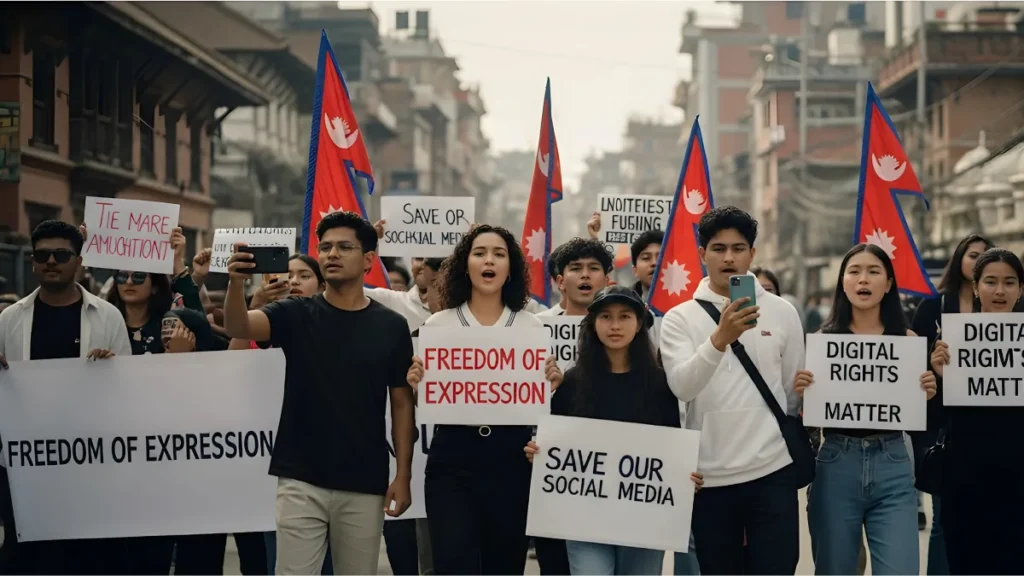
Nepal has blocked major social media platforms including Facebook, Instagram, YouTube, and X (formerly Twitter) starting September 4, 2025, sparking widespread protests among young people. The sites were blocked as of midnight on Thursday, 4 September and affects all Meta products, leaving millions of users without access to their favorite platforms.
Why Did Nepal Ban Social Media?
The Nepal government announced the ban after major social media platforms failed to register with the Ministry of Communication and Information Technology within a 7-day deadline. The government says platforms can return once they follow local registration rules. However, the move is widely seen as an effort to tax the revenue they generate in the country, and to control content critical of government.
The ban affects 26 platforms total, including Facebook, Instagram, YouTube, X, Reddit, and LinkedIn. Only registered platforms like TikTok and Viber remain accessible to users.
Gen Z Fighting Back Against Digital Restrictions
Protest grows against Nepal’s social media ban as young people express anger over losing access to platforms they use for work, education, and staying connected with friends and family. Gen Z users, who grew up with social media, feel particularly affected by this sudden digital blackout.
The youth are demanding the government reverse this decision immediately. They argue that social media is essential for business, education, and free expression in today’s digital world.
What Happens Next?
The ban remains active until the blocked platforms agree to register with Nepal’s government. Communications and IT Minister Prithvi Subba Gurung said, “We gave them enough time to register and repeatedly requested them to comply with our request”.
However, “Nepal’s sweeping ban on social media sets a dangerous precedent for press freedom,” said CPJ Regional Director, raising concerns about censorship and information access.
Young protesters continue pushing for immediate restoration of social media access, while the government maintains its stance on platform registration requirements.
This story is developing as protests continue across Nepal.